

Living in Columbus, Ohio:
Why people move to Central Ohio and stay.
Columbus, Ohio is one of the best-value big cities in the country. A metro of 2.24 million growing at twice the national rate, a cost of living 11 percent below the national average, a 21.5 minute average commute, five-star school districts and nearly 29,000 acres of parkland. It is a rare place where one normal salary still buys a house near good schools.
A full-picture look at what it’s like to actually live in Columbus, Ohio.
People move here from Chicago or Denver and the first thing they tell me is that the drive to work took nineteen minutes instead of fifty. A few months later it is that they bought a house with a yard for what a two-bedroom condo cost back home. Somewhere around year two it is that their kids ride bikes to the park and they know the names of everyone on the street.
I have been selling homes in Central Ohio since 2005, more than a thousand of them, and I have watched that same arc play out too many times to call it luck. Columbus is built in a way that hands people back their time and their money, and most of what gets written about this city never gets around to explaining why.
The growth is real, and it is the durable kind.
Columbus does not announce itself. It feels like a mid-sized Midwestern capital with a very large university in the middle of it, which is why the growth numbers surprise people. The metro added more than 21,000 residents in 2025 to reach 2,242,028 people, and that 1.0 percent growth rate was double the national pace. It put Columbus in a top-15 group for growth among large metros that is otherwise almost entirely Sun Belt. Roughly half the gain came from international migration, and this one metro accounted for 53 percent of Ohio's total population increase.
Think about what that means. In a state where most places are flat or shrinking, and in a region people spent thirty years writing off, more than twenty thousand people a year are choosing this specific city. They are choosing it over Nashville and Charlotte and Denver, with full knowledge of the winters.
The economy underneath that is the part I would want to know about if I were moving a family here. Unemployment across the region sits at 3.6 percent against a national 4.3 percent, and no single industry accounts for more than 20 percent of regional employment. That is the number that matters if you remember what happened to single-industry cities in 2008. Chase, Nationwide, Ohio State, the state government, Honda and a deep logistics footprint spread the risk across finance, insurance, education, healthcare, government and manufacturing all at once. When one sector has a bad year here, the others carry it.
Intel gets mentioned in every relocation article written about this city, and the first Licking County fab has slipped to roughly 2030. I would rather you heard that from me than found it out later. The encouraging part is what it says about everything else: all of this growth, all of these jobs, all of this construction has happened while the biggest announced project in state history has not opened a single door yet. Columbus is doing this on its own. Intel is upside on top.
Columbus is built in rings, and there is a ring for almost everyone.
The range here is the thing I would sell you on before anything else. Most cities make you choose between a walkable neighborhood you cannot afford and a suburb with no character. Columbus gives you both, twenty minutes apart, at prices that would be entry-level almost anywhere else.
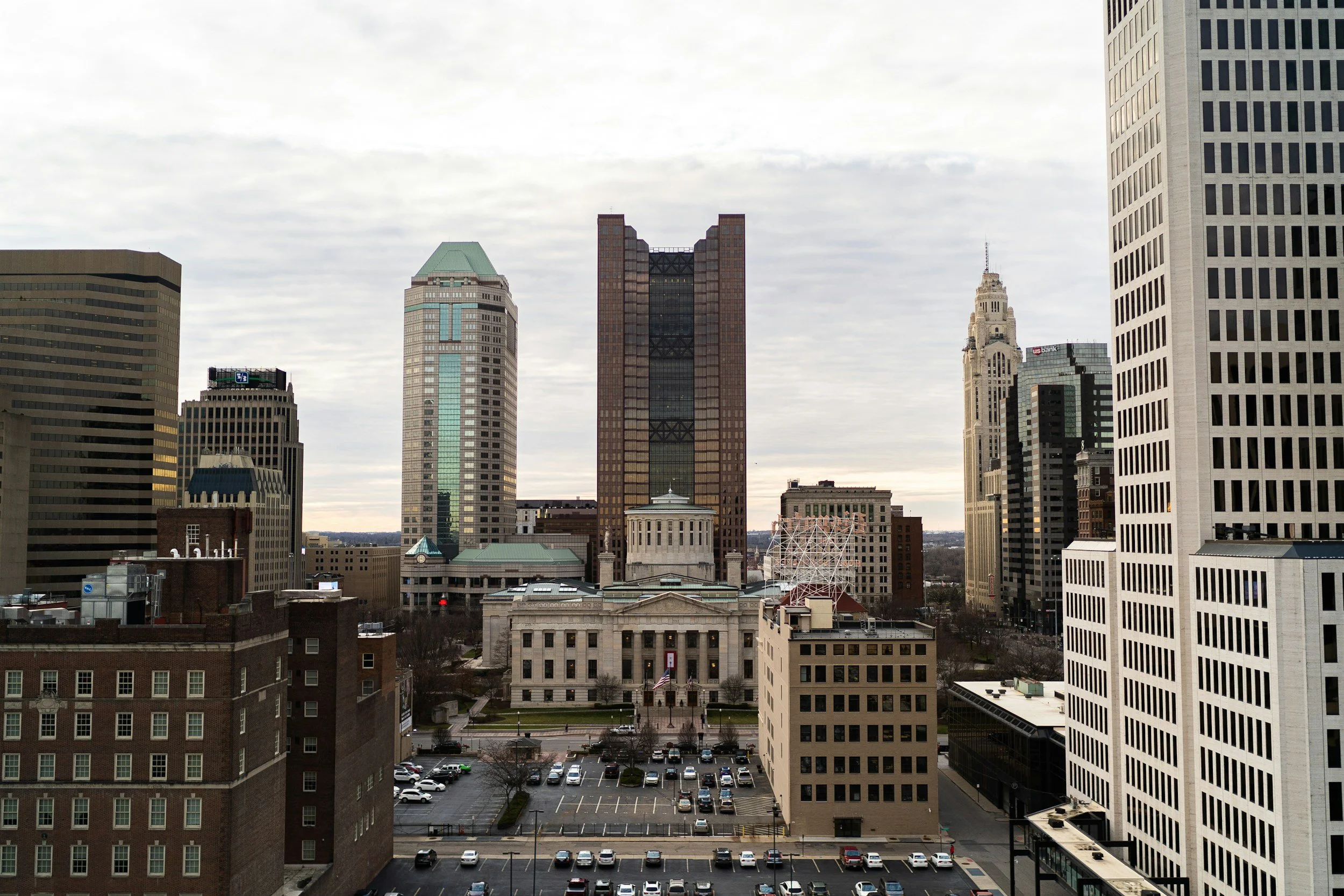
At the center is downtown and the walkable neighborhoods pressed up against it. The Short North runs galleries, restaurants and condos up High Street. German Village is brick streets and 19th century houses south of downtown, with Schiller Park in the middle of it and one of the best bookstores in the country on the corner. Italian Village and Franklinton have absorbed most of the new construction and most of the creative energy that comes with it. Clintonville sits north of campus and holds the closest thing Columbus has to a walkable family neighborhood at a price a teacher can reach. Bexley, Grandview Heights and Upper Arlington are technically separate cities but function as extensions of the core, with their own schools and their own price tiers.
Then there is the I-270 outerbelt, where most of the housing is and where most of my buyers land. Dublin, Worthington, Westerville, Hilliard, Gahanna, Powell, New Albany and Grove City each have a real personality, a real downtown in most cases, and their own school district. In mid-2026, Columbus REALTORS® district-level figures put the New Albany-Plain Local median near $932,000 while Westerville City Schools sat around $427,000. Both sit inside the same outerbelt, both feed strong districts, and that half-million-dollar spread is what makes this market workable for buyers at very different budgets. Past 270 you get Delaware County, Pickerington, Canal Winchester and the Licking County towns, where land is cheaper, lots are bigger and the drive is a little longer.
One thing worth knowing before you start touring: a Columbus mailing address tells you nothing about which school district or which city you are in. I have watched people fall in love with a house believing it was in one district and find out at contract that it was not. It is an easy problem to avoid with someone local checking the address, and it is the single most common thing I fix for out-of-state buyers.
Columbus is one of the last big cities where a normal salary still reaches a good school district.
Once Columbus itself is settled, the Columbus neighborhood guide compares the suburbs one by one, including who each fits and who should look elsewhere.
The cost of living in Columbus, compared with where you are now.
| Metro | Cost of living index (100 = national average) |
|---|---|
| Denver, CO | 125 |
| Austin, TX | 115 |
| Chicago, IL | 112 |
| Nashville, TN | 101 |
| Charlotte, NC | 97 |
| Columbus, OH | 89 |
| Indianapolis, IN | 88 |
This is where Columbus wins outright, and the useful comparison is the gap between here and the metro you are leaving.
Read it as a salary translation. Leaving Denver, you keep close to 30 percent more of the same paycheck here. Leaving Chicago, better than 20 percent. Leaving Charlotte or Nashville, the difference is slight, and coming from Indianapolis you will find Columbus a touch more expensive.
What that gap buys is the part the index cannot show you. It is the difference between a starter condo and a four-bedroom with a yard in a five-star district. It is one parent being able to go part-time. It is a paid-off car and a college fund that gets funded. I have sat at closing tables with families who spent a decade renting on a coast and bought their first house here in their thirties, and the relief in the room is not something a spreadsheet captures.
Three local details are worth having in hand. Columbus levies a 2.5 percent city income tax and the suburbs set their own rates, so where you live and where you work both affect your take-home. Property taxes vary between districts, and two houses at the same price four minutes apart can carry different monthly bills. And the tax figure on an older listing sheet may not match what you will pay after the county's latest reappraisal. None of these are dealbreakers. They are just numbers you want before you fall in love with something.
I broke affordability down area by area, taxes and HOA fees and the older-home versus newer-build difference included, in the cost of living by neighborhood guide. Read that one before you talk to a lender.
Source: C2ER Cost of Living Index, Q1 2026.
Schools: an unusual concentration of very good districts.
Ohio rates districts one to five stars on annual state report cards, and Central Ohio has a density of top-rated districts that metros twice its size do not.
On the 2024-25 cards, four Franklin County districts earned the full five stars: Bexley, Grandview Heights, Upper Arlington and New Albany-Plain Local. Olentangy, in Delaware County and one of the largest districts in the state, held five stars across every single category. Dublin came in at four and a half. Hilliard, Worthington, Gahanna-Jefferson, Canal Winchester and Pickerington each landed at four. Columbus City Schools, the largest district in the state, rates two overall, with selective-admission arts and STEM magnet programs that perform far above that and are worth a look for the right kid.
Line that up against what those addresses cost. Families relocating from metros where a comparable district means either private tuition or a seven-figure house tend to do the math twice, because a four-star Central Ohio district sits inside neighborhoods where the median is in the four hundreds. That combination is the single strongest argument for raising kids here.
Ratings move every year and they measure a narrow set of things, so pull the current card for any district you are considering and read the components rather than the headline star. The district-by-district detail, including how ratings tie into resale value, is in the Central Ohio school district guide.
Parks and trails, which is where Columbus quietly beats everybody.
If I had to name the amenity that most exceeds what people expect, it is this one.
Metro Parks runs 22 natural-area parks across seven Central Ohio counties, with more than 270 miles of trails and over 28,900 acres of land. On top of that, the City of Columbus maintains 410 parks covering 14,069 acres and connects to 230 miles of regional trail. For a metro of 2.2 million, that is an enormous amount of protected green space, and almost all of it sits within a twenty-five minute drive of almost everyone.
Scioto Audubon sits a ten minute walk from downtown and has one of the largest outdoor climbing walls in the country, on land that was an industrial dump twenty years ago. Highbanks, north of the city off 315, runs to more than 1,200 acres of ravines and river bluffs. The Olentangy and Scioto trails stitch together over 30 miles of paved path, which is how people bike from Clintonville or Grandview to work without touching a road. Downtown, the Scioto Mile covers 175 acres of riverfront parkland with a fountain that every kid in this city has run through in July.
None of it costs a dollar to use, which is a piece of the affordability picture no cost-of-living index captures. Families who move here from places where outdoor recreation means a membership or a two-hour drive notice it within the first month.
What people here do on a weekend.
Ohio State sets the rhythm of autumn whether you care about football or not, and most people end up caring. On a home Saturday the whole north side of the city organizes itself around Ohio Stadium, and there is something to being in a place where a hundred thousand people want to be in the same room.
The rest of the year is busier than newcomers expect. The Columbus Crew have won three MLS Cups and play downtown in the first soccer-specific stadium built in this country. The Blue Jackets are at Nationwide Arena, the Clippers play Triple-A ball at Huntington Park in one of the best small stadiums in baseball, and the Memorial Tournament at Muirfield Village turned 50 in 2026 on the only course in the world to have hosted the Ryder Cup, the Solheim Cup and the Presidents Cup.
Summer is when this city shows off. The Columbus Arts Festival pulls more than 400,000 people onto the downtown riverfront in June, Red White and Boom brings a similar crowd on July 3, and the All American Quarter Horse Congress runs three weeks in the autumn as the largest single-breed horse show in America at roughly 725,000 visitors. Festival Latino, the Asian Festival at more than 100,000 attendees, Pride, Jazz and Rib Fest and Schmidt's Oktoberfest fill in most of what is left of the calendar. Almost all of it is free.
The food is the thing people are least prepared for. Resonance placed Columbus 34th on its 2026 America's Best Cities list, the highest of any Ohio metro, citing the restaurant and nightlife scene alongside the tech growth. Restaurant groups have tested concepts here for decades because the demographics sit close to a national average, and the side effect is a city with far more range on the plate than a metro this size should have.
Hospitals, the airport, and the unglamorous things that make a move work.
Healthcare is the factor buyers forget to check until someone in the family needs it, and it is one of the strongest cards this city holds.
Ohio State's Wexner Medical Center has been nationally ranked by U.S. News for 34 consecutive years and is the top-rated adult hospital in Columbus, second in the state behind the Cleveland Clinic. Its new 26-story tower, a $1.8 billion project with up to 820 beds, opened in 2026. Nationwide Children's sits on the U.S. News Best Children's Honor Roll, is nationally ranked in 11 pediatric specialties, and rates first in Ohio and first in the entire Midwest. Families fly into this city from all fifty states to use it. If you have a child with an ongoing medical need, that is a reason to choose Columbus over a comparable metro, full stop.
John Glenn Columbus International is a fifteen minute drive from downtown, which almost no metro this size can claim, and a $2 billion terminal replacement is underway. One Columbus puts the region within a ten hour drive of nearly half the U.S. population, which matters more than it sounds like it should when you are the one who moved and everyone else is deciding whether to come see you.
Four real seasons, and one honest caveat.
Central Ohio gets close to 185 comfortable days a year, and late April through mid-October is as good a stretch of weather as anywhere in the country. Spring runs long. Autumn is the season people end up planning their whole year around, with color through October and the kind of Saturdays that make you understand why nobody here leaves in the fall.
Summer brings about 21 days at or above 90 degrees and they are humid ones, which is roughly a third of what Atlanta or Dallas deals with.
Winter is mild by Midwestern standards. Columbus averages 28.2 inches of snow a year and about 41.6 inches of precipitation across roughly 141 days. The city sits too far south and west for serious lake-effect off Erie and out of the path of the coastal storms that bury the east, so a ten inch dump is a rare event rather than an annual one. Anyone coming from Cleveland, Pittsburgh, Buffalo or Chicago will find winter here a straightforward upgrade.
The caveat is the cloud cover. December delivers sunshine on about a third of its available daylight hours, and that pattern holds through much of January and February. People arriving from Phoenix or San Diego usually handle the first winter fine and start noticing it around the third. It is worth knowing going in, and the people who thrive here are the ones who plan for it, a good lamp, a winter hobby, a February trip somewhere sunny.
Getting around, and the hours you get back
The average commute in Columbus runs 21.5 minutes against a national average of 26.4, and the highway grid was built for a city that expected to grow, so it holds up in practice.
Do that arithmetic against where you live now. If you are trading a fifty minute each-way commute for the Columbus average, that is close to an hour back every single day, something like four and a half hours a week, more than two hundred hours a year. That is the difference between making it to your kid's game and hearing about it. Of everything on this page, this is the change my clients mention most in the first year.
The trade-off is that this is a driving city. Around 68 percent of workers drive alone and another 18 percent work from home, and while COTA runs the buses well on certain corridors, most suburban addresses need a car. Parking is cheap and easy nearly everywhere, which softens it considerably.
That picture is improving. Voters passed the LinkUS levy in November 2024, funding roughly $8 billion of transit and trail work through 2050, and three bus rapid transit corridors are in design along West Broad, East Main and a northwest route through Dublin, with the first lines targeted for 2029 and 2030. The West Broad timeline has already slipped and COTA calls it fluid, so treat better transit as something likely to lift your resale value over the next decade rather than something that changes your commute next year.
If the commute is your deciding factor, I mapped the areas getting easier to drive from in the commute-friendly neighborhoods post.
The housing market, and why this is a decent moment to buy
Central Ohio's median sale price hit $350,000 in July 2026, up 2.3 percent year over year, with 3,083 closed sales across the Columbus REALTORS® footprint. Steady appreciation, no bubble behavior, which is what you want if you are buying a place to live rather than a trade.
Inventory reached 6,193 homes, the highest July level in more than a decade. At 2.4 months of supply against a balanced market of four to six, sellers still hold the advantage, and well-priced houses in the top districts still draw competing offers. But that inventory number is the best news buyers have had here in years.
What has changed is the experience of buying. You are no longer expected to waive everything and write an offer in ninety minutes on a house you saw once. There is room to inspect, room to negotiate repairs, room to sleep on it. Three years ago there was none of that, and buyers who sat out that stretch were right to.
Where competition is fiercest and where it has eased is broken down in the Columbus market competitiveness post.
Whether Columbus, Ohio is a good place to live comes down to what you want from a city.
-
Columbus is a strong fit if:
You are trading a high-cost metro salary for space, and an 89 index against your current 112 or 125 changes what you can buy outright
You want your commute back, and driving twenty minutes instead of fifty is worth more to you than a train
You want well-rated public schools without private tuition, in neighborhoods a normal household can afford
You want parks, trails, youth sports and free festivals more than you want a scene
You are moving for work in finance, insurance, healthcare, logistics, government or tech, where the employer base here runs deep and hiring is steady
You want a city that is still becoming something, where a house bought now sits in front of twenty-five years of planned investment
-
Columbus will test you if:
Three things worth taking seriously:
You want to live car-free and rely on transit, which is coming but not here yet
Winter overcast has worn on you in places you have lived before
You want mountains, an ocean, or outdoor weather that never asks anything of you
The next decision is where in Columbus you land.
Most people arrive certain about Central Ohio and completely unsure which community inside it fits their budget, their commute and their family. That is the part I do every week, and it is my favorite part of the job, because forty communities is overwhelming right up until someone who knows them narrows it to four.
Tell me what matters to you and I will build you a short list →
If you are moving to Columbus with kids, the best places to live in Central Ohio for families post is the fastest way to narrow things before we talk. And if you are doing this from another state (most of my relocation clients are), the relocation buyer's guide walks through how it works from a distance, virtual tours and neighborhood walkthroughs included.
Frequently asked questions about Columbus and Central Ohio neighborhoods:
-
For most people relocating from a higher-cost metro, yes, and the numbers back it up. Columbus offers a cost of living around 11 percent below the national average, a 21.5 minute average commute, five-star school districts and nearly 29,000 acres of Metro Parks land. The main trade-offs are car dependence and overcast winters.
-
Columbus scores 89 on the C2ER Cost of Living Index where 100 is the national average, making it roughly 30 percent cheaper than Denver and 20 percent cheaper than Chicago. The median household income in the city is $66,082, and the Central Ohio median home sale price was $350,000 in July 2026, which buys a single-family house with a yard in most of the metro.
-
The average one-way commute in Columbus is 21.5 minutes, compared with a national average of 26.4 minutes. About 68 percent of workers drive alone and 18 percent work from home. Anyone trading a fifty minute commute for the local average gains back more than two hundred hours a year.
-
On Ohio's 2024-25 state report cards, Bexley, Grandview Heights, Upper Arlington, New Albany-Plain Local and Olentangy all earned five stars. Dublin earned four and a half, and Hilliard, Worthington, Gahanna-Jefferson, Canal Winchester and Pickerington earned four. Verify the district by exact address rather than by mailing city, because boundaries and mailing addresses do not match.
-
Mild by Midwestern standards. Columbus averages 28.2 inches of snow a year, well under Cleveland or Buffalo, and major snowstorms are uncommon because the city sits outside the lake-effect and coastal storm tracks. The harder part is cloud cover, with December seeing sunshine roughly a third of available daylight hours.
-
For most residents, yes, though parking is cheap and traffic is light by big-city standards. The Short North, German Village, Clintonville and Grandview support car-light living. The LinkUS plan will add bus rapid transit corridors starting around 2029.